SEO and GEO: 10 Mistakes That Kill Your Visibility
Optimisation isn’t what it used to be. Keywords and meta tags once ruled, but visibility now depends on meaning and context. Learn how to strengthen your SEO and GEO strategy to stay visible and relevant in the era of AI search.
Kategorije:


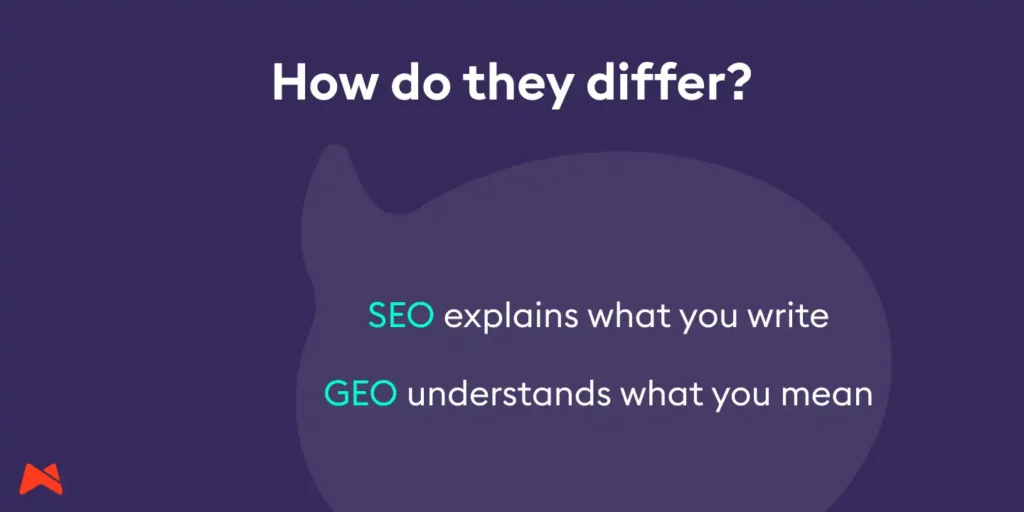
Optimisation is shifting fast — from classic SEO to GEO (Generative Engine Optimization). Traditional SEO depended on keywords and backlinks. GEO is about meaning, credibility, and context that AI models like ChatGPT and Gemini can recognise.
Generative systems don’t rank pages by keywords anymore. They connect ideas, analyse relationships between entities, and assess how each source contributes to shared knowledge. Content that adds depth and insight earns visibility. Repetition doesn’t.
Below, you’ll find ten SEO and GEO mistakes that quietly erode trust and cost companies their visibility.
Classic SEO Is Losing Ground to AI Search
Classic SEO was built on helping algorithms interpret a page: keywords, titles, and links guiding the crawler toward meaning.
Those basics still have their place, but their weight is shrinking wherever search results are no longer the traditional SERP.
In AI-driven search, users often see the answer before they ever reach a website. Being optimised doesn’t guarantee being visible.
To appear in AI results, your content needs to offer verified, context-rich information that models can recognise as trustworthy. Only then can you become a reliable source that AI tools cite in generative search.
How Generative Engine Optimization Redefines Search
Generative AI models like ChatGPT and Gemini don’t follow search engine rules. They don’t look for keyword matches or rank pages by relevance. They build meaning. Each topic becomes a network of ideas, entities, and relationships that together form understanding.
Instead of analysing which page matches a keyword best, AI looks for what the content truly communicates and how it connects to the wider body of knowledge. As explained in the Search Engine Land article on adapting content for AI search, success now depends on the value and meaning your content adds, not on how often a keyword appears.
This is the foundation of GEO — Generative Engine Optimization. To succeed in it, brands need a connected system that unites SEO, UX, PR, and content into one structure of trust and relevance.
Companies that adapt early will be recognised as credible sources for AI models.
At Madwise, we call it what it is: GEO is the new currency of digital visibility.
Common SEO and GEO Mistakes That Keep You Invisible
Here are ten SEO and GEO mistakes that silently strip brands of visibility in generative search.
Some stem from old optimisation routines, others from unclear entity definitions, messy semantic structure, or ignored user behaviour. Each one makes it harder for AI systems to recognise your relevance—or they simply pass you by.
1. Optimising Only for Classic Search Engines
Classic SEO still focuses on following algorithm rules. But generative models don’t rank results; they build meaning. When content repeats familiar phrases without adding context, it becomes invisible to AI.
Real optimisation now means contributing to understanding and shaping the knowledge around your topic.
2. Unclear Entities That Confuse AI Models
Generative AI works through networks of entities: people, brands, products, places, concepts.
If your website doesn’t clearly define who you are or how you connect to others in that network, AI struggles to recognise your brand and understand your relevance. The result is weaker visibility and fewer mentions in AI-driven results.
3. Ignoring Semantic Architecture
Many websites still use a flat, chronological blog layout with no thematic hierarchy. To AI, this looks like a set of disconnected ideas.
Modern SEO and GEO rely on a central topic supported by structured subpages that define relationships, depth, and context. That structure helps AI models connect your content to meaning — not just to keywords.
4. Treating Content as Plain Text Instead of Data
In next-generation search, content is more than text. It’s data that shapes how AI learns and connects meaning.
Without structured elements such as schema markup or relational links, models can’t recognise entities or understand how they relate.
Paragraphs without semantic signals fade into the background, making your page harder to read for AI and easier to overlook. At Madwise, we often say it plainly: GEO is the new currency of digital visibility.
At Madwise, we call it what it is: GEO is the new currency of digital visibility.
5. Following Tools Instead of Logic Hurts SEO and GEO
Tools like Surfer, Ahrefs, and SEMrush translate optimisation into numbers. Useful, yes — but they only show how content is structured, not what it communicates.
In GEO optimisation, meaning drives visibility. AI models don’t evaluate the surface of text; they interpret how ideas connect and what value those links bring to a topic.
When you optimise for metrics instead of meaning, your content stops being recognised as relevant in generative search.
6. Ignoring User Experience as a GEO Signal
User experience used to influence SEO indirectly. Today, AI treats it as proof of meaning and relevance.
If visitors leave a page within seconds, the model concludes the content didn’t meet their intent. UX signals are no longer background metrics — they’re part of how AI understands quality.
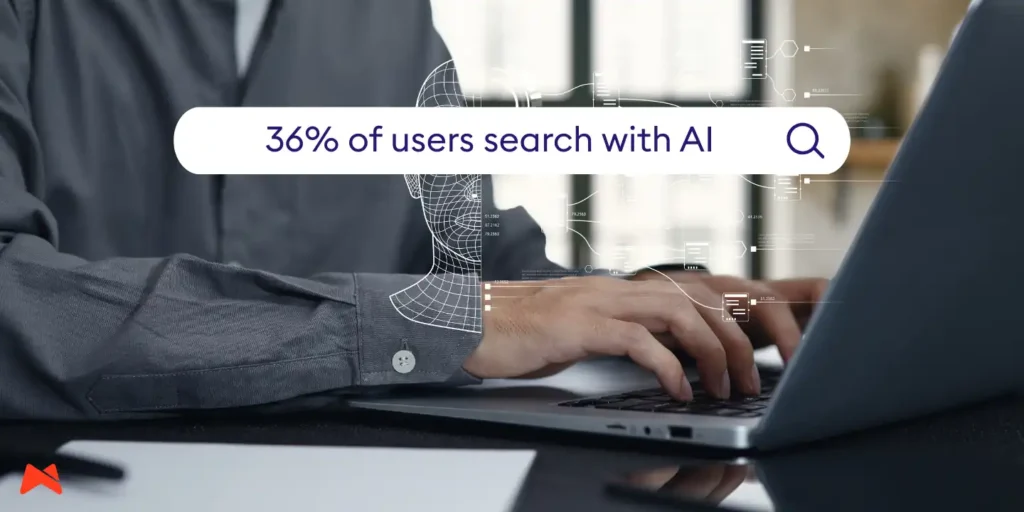
According to the detailed Adobe research on how generative AI transforms search, 36% of users already turn to AI assistants instead of traditional search. It confirms that behavioural signals now guide how models interpret which content deserves visibility in generative search.
7. Neglecting E-E-A-T When Building Online Credibility
Experience, expertise, authority, and trust are not decorative traits. They define how AI recognises credibility. When an author leaves no digital footprint, the content lacks proof. When a website has no external references, AI has no signal that it belongs to a trusted source.
In the GEO context, strong E-E-A-T signals are what decide whether you’re included in AI models or left out of the conversation entirely.
8. Repeating Content Without Added Value for AI Models
When the same text appears across multiple target pages with only slight edits, AI flags it as duplication.
Modern models don’t read for wording — they read for meaning and contribution. Each page must have a clear semantic purpose that adds something new to the topic. Content that repeats instead of expanding context doesn’t strengthen visibility; it weakens it.
9. Failing to Monitor AI Presence in GEO Optimisation
Many companies still rely on old performance metrics like traffic, CTR, and rankings. In the GEO era, that view is incomplete.
According to the Semrush analysis on the rise of AI Overview results, the share of AI-generated answers grew from 6.49% in January to 13.14% in March. More searches now end before users ever click.
The key question is whether AI recognises, mentions, cites, and understands your brand in the right context.
To measure that, you need tools that track appearance in AI answers, detect citations, and build visibility within generative models.
Read why visitors from AI channels click less but convert more in the blog ‘AI Traffic Brings Fewer Page Views but More Conversions’.
10. Splitting SEO, UX, PR, and Content Into Silos
SEO, UX, PR, and content used to share space but rarely a strategy. Each worked toward its own metrics and short-term goals. Today, AI recognises them as one ecosystem built on trust and meaning.
SEO without a strong user experience, content without defined entities, or PR without structured data sends scattered signals. To AI, those signals don’t add up to authority. Visibility now depends on how well all these layers connect and support each other within a single GEO framework.

How to Strengthen GEO Presence and Credibility
GEO calls for a shift in mindset. The question is simple:
How do you become a recognised source of knowledge within the AI ecosystem?
According to the Bain analysis on the shift from clicks to AI summaries, digital marketing is entering a new stage. Two major shifts now define who reaches the user: generative AI summaries inside search engines and independent LLM search platforms. They decide which brands make it into the conversation and which are left out.
Every piece of content, every link, and every data point you publish contributes to the broader story AI models build about your brand.
That’s why GEO isn’t just an SEO task. It’s a connected discipline that brings together:
- SEO and UX, because user experience proves the relevance and credibility of your content.
- PR and content, because together they create trust and build presence in external contexts.
- Analytics and data, because they confirm that both people and models interpret your brand accurately.
When AI models start mentioning, citing, and linking your brand to specific topics, you’ve entered their semantic world. That’s the new currency of visibility.
Want to strengthen your online presence? Explore the Madwise service Optimization for AI search.
The Future of Visibility Belongs to GEO
Companies that learn to communicate with meaning will become the go-to sources of knowledge for generative models. Those that keep operating within outdated SEO frameworks will fade from view because AI simply won’t recognise their relevance.
At Madwise, we explore how optimisation evolves and what it takes to stay visible as search transforms. If you want to strengthen your position in this new landscape, get in touch with us.