Protect Your Brand Reputation from AI-Generated Answers
AI-generated answers influence how customers perceive your brand. When they show your name in the wrong context, trust erodes fast. Learn how to stay visible in AI search and protect your brand reputation before algorithms define it for you.
Kategorije:


We’re in an era where AI-powered search is setting new rules. The reputation of your brand is often shaped by AI-generated answers, long before you get a say in it.
To keep trust on your side, start managing your presence early—before artificial intelligence decides how your brand looks to the world.
How AI-Generated Answers Damage Brand Reputation
Large language models (LLMs) evaluate your brand based on what’s already online. When that content is outdated, inaccurate, or negative, it often ends up in AI answers that can harm your reputation.
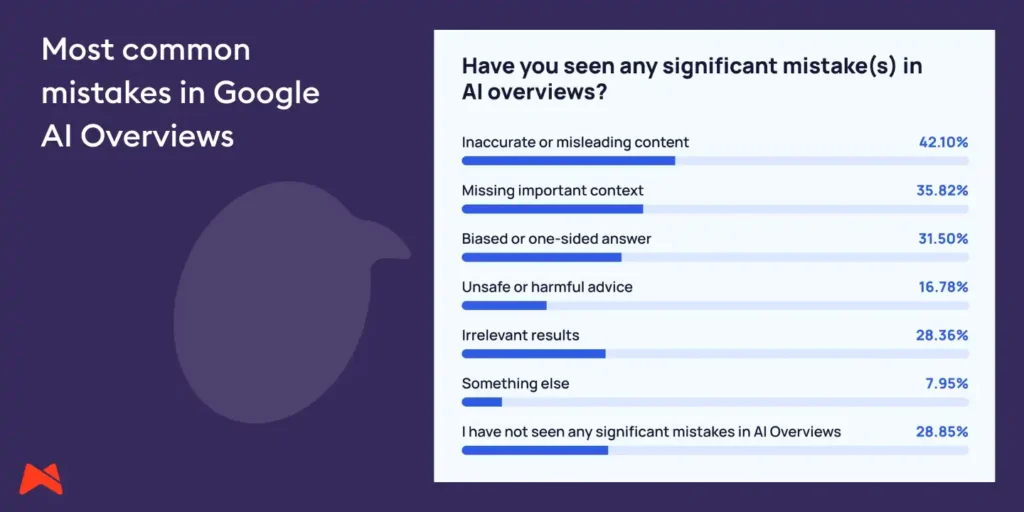
- According to the Exploding Topics research on AI trust gaps, 71.15% of users have already seen major mistakes in Google AI Overviews. 42.1% reported misleading or false information, and 16.78% encountered harmful or unsafe advice.
- Over 40% of users rarely—or never—click the original source mentioned in AI search summaries. If your brand appears there in the wrong context, you lose the chance to correct it at the source and control how it shows up in AI search results.
As we explained in our article on how AI traffic reduces page views but increases conversions, user behaviour is shifting — people rely more on summaries and less on websites themselves.
That’s why brands must actively manage their content across every platform AI uses to learn. Consistent, accurate messaging helps protect your visibility and lowers the risk of being misrepresented by AI-generated answers.
Four Risks Your Brand Faces in AI Search
AI search brings new opportunities, but also serious risks. When wrong AI answers dominate the results, your brand can quickly lose control over how people see it — and with that, their trust. Below are four key risks every brand should monitor.
- Incorrect or negative portrayal: AI-generated answers often include false information if such data already exists in the original sources. Once repeated across AI search, these inaccuracies begin to sound like facts.
- Loss of story control: AI frequently reshapes or rewrites content. Your brand may be presented in a way that doesn’t reflect your intent, leading to distorted meanings or misplaced emphasis.
- Disappearing from AI search: If AI search fails to recognise or properly include your brand, it can vanish from visibility altogether. Users then turn to competitors who appear more prominently in summaries.
- Decline in trust: AI answers in Google AI Overviews may look reliable, but users remain sceptical. According to Search Engine Land’s study on trust in AI results, 82% of people doubt their accuracy. When your brand appears next to an unreliable AI answer, customer confidence drops fast.
Stay Alert: Manage Your Brand in AI Search
Keep a close eye on how your brand appears across major AI platforms. Check what Google AI Overviews, ChatGPT, and Perplexity display when someone searches for your name.
This helps you spot false or misleading information before it shapes public opinion. Wrong AI answers can easily distort how people see your brand.
If that happens, be ready with clear, aligned responses. You don’t need long statements — a few short, consistent messages are enough for press comments or social posts.
Regularly follow mentions, reviews, and user reactions. They reveal how your brand is perceived and signal when it’s time to step in.
The goal isn’t full control, but consistency. When your tone and facts stay aligned across channels, AI-generated answers are far more likely to represent your brand accurately.
Practical Steps to Protect Your Brand from AI Answers
1. Align your messaging and descriptions across all channels
Standardised descriptions are the foundation of trust. Make sure every profile, website page, and online mention of your brand stays aligned with your positioning and tone.
2. Build presence on platforms AI tends to quote
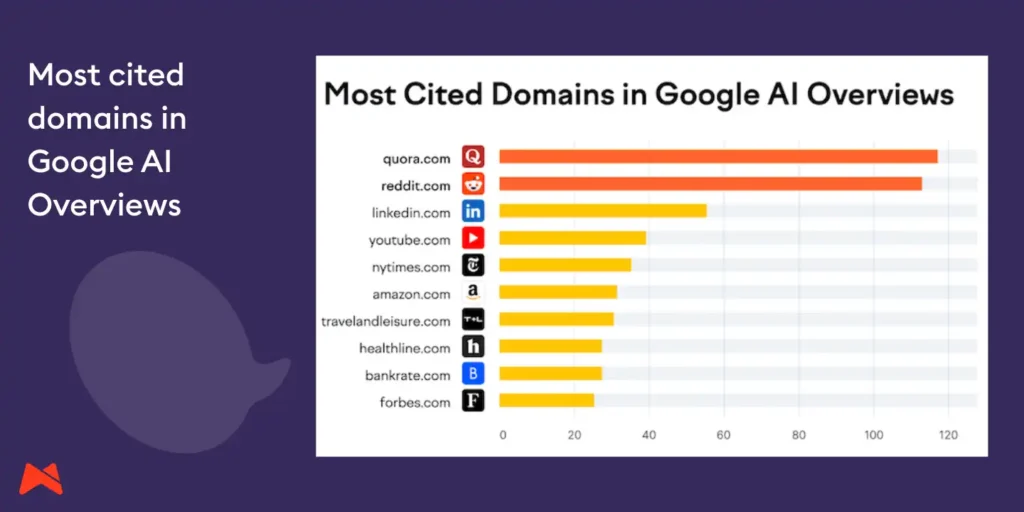
Large language models often pull information from Reddit, Quora, and credible media outlets featured in Google AI Overviews. If your brand appears there in a positive context, you boost the chance of being represented correctly in AI search results.
3. Use digital PR and collaborate with influencers
Find the media outlets AI most often cites in your field and make sure your brand has a voice there. Working with influencers or respected industry figures can further strengthen your visibility and credibility.
4. Encourage authentic reviews and real user experiences
AI systems rely on genuine feedback. When your brand collects enough positive and verifiable reviews, it earns stronger visibility in AI search and builds deeper trust with users.
5. Get your brand listed in structured ‘best of’ roundups
Clear, well-organised ‘best of’ lists help AI systems extract and reference data more accurately. If your content is transparent and logically structured, it’s far more likely to appear in AI search results — improving both visibility and reputation.
6. Expand expert content, research, and educational resources
Share more of your expertise. Don’t stop at product or service descriptions. Publish research, case studies, videos, templates, or frameworks that help users understand the bigger picture of your industry. This positions your brand as a credible, trusted source.
Control AI Search Before It Controls Your Brand
AI search is quickly becoming a core channel for brand discovery. Visitors arriving through these channels already have the basics. Large language models feed them key information, so they’re often ready to make a decision.
But the risks are real. If your brand isn’t clearly mentioned or cited, AI can simply skip over you. That means losing visibility and handing your market share to competitors.
The issue lies in the sources. When AI pulls data from third-party websites, it can generate inaccurate descriptions, outdated information, or misplaced emphasis. Each mistake directly affects your reputation.
The Search Engine Land study on brand protection in AI search highlights how important it is to regularly check where AI systems collect information about your brand.
Search is changing. Brands that adapt early will be more visible, more credible, and more present where people now look for answers.
So ask yourself: will you shape your story in AI results, or let others tell it for you?
Want more control over AI-generated answers? Get in touch, and let’s protect your brand reputation together.