Creative Diversity: The Fuel Behind Andromeda (Meta Ads)
Harness the power of Meta Andromeda for better conversions. Meta Ads perform best when you embrace creative diversity and feed the algorithm with fresh, diverse signals. Learn how to do it right.
Kategorije:
Kazalo vsebine
- What Is Meta Andromeda and Why ‘Creative Diversity’ Matters
- From Targeting to Creative Signals: The Logic Behind Meta Ads
- Variation vs Iteration: What Actually Drives Growth
- How to Apply Creative Diversity in Practice
- Balancing Diversity and Efficiency in Meta Ads
- Plan Creative Like a Film Festival, Not a Single Premiere
- What This Shift Means for Meta Advertisers and Marketers
- Your 14‑Day Meta Ads Checklist

Meta has rewritten the rules of ad optimisation. Manual audience targeting no longer delivers — creative signals do. The data your visuals, copy, and formats send to the algorithm now decides how well your Meta Ads perform.
If you want Meta Andromeda, Meta’s delivery algorithm, to truly work for you, it needs options. Not one overused creative, but a range of concepts that help the system learn faster and spend your budget smarter.
In this article, we’ll unpack what creative diversity really means, why it’s more than swapping a headline, and how to design campaigns that scale without sending CPMs through the roof.
What Is Meta Andromeda and Why ‘Creative Diversity’ Matters
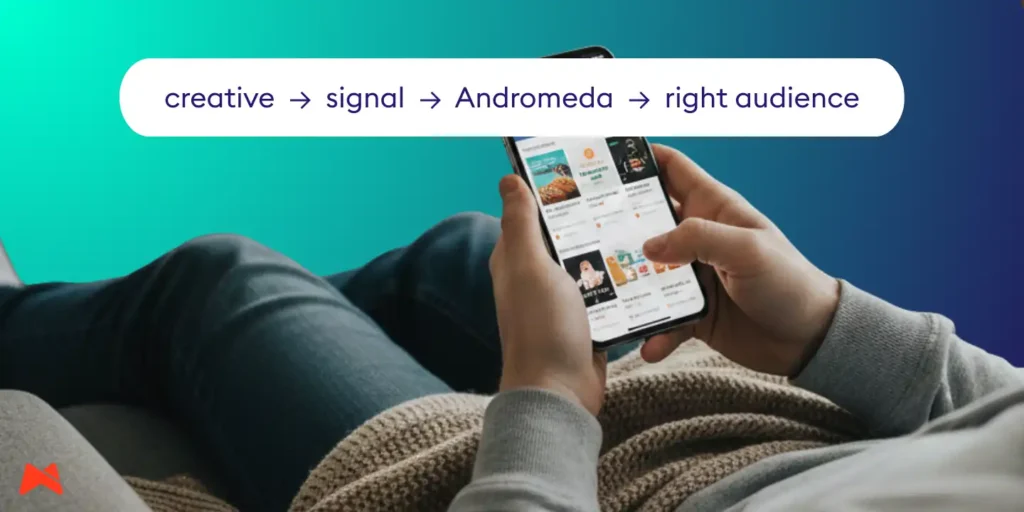
Meta Andromeda is an advanced algorithm that automatically matches ads with the most relevant audiences (Meta Business News: The Creative Advantage). It acts like a retrieval engine, analysing thousands of creative combinations, contexts, and behaviours in real time to find the best match.
In the past, advertisers manually hunted for their audiences. Today, Facebook algorithms find the right people for your creative. The quality and diversity of your ads now determine how well the system can perform.
Most campaigns stall for one reason — too few creatives, too little variety. When the system only has two options, it can’t optimise. It just picks the slightly better one and stops learning.
From Targeting to Creative Signals: The Logic Behind Meta Ads
The old approach was simple: define your audience, set interests, demographics, lookalikes, and exclusions — then launch.
The Andromeda algorithm works differently. It’s more like an ambitious sommelier:
- you bring a selection of creative ‘bottles’,
- and it serves them to the right people, at the right time, in the right context.
That’s why your creatives have become the filter Meta uses to recognise your audience. Different tones, visuals, formats, and angles create unique signals that tell the system:
- who reacts to a problem–solution message,
- who responds to a meme-style comparison,
- who needs authority or social proof,
- who converts after seeing UGC or a real-life demo.
Feed the algorithm just one or two similar videos, and you’re starving it of data. It has nothing new to compare or learn from. Meta Ads optimisation becomes limited not by your budget, but by the lack of creative diversity. The more creative range you provide, the better Meta Andromeda can read signals and deliver your ads to the right people.
Variation vs Iteration: What Actually Drives Growth
This is where most advertisers slip up.
Creative Iteration: Minor Tweaks, Minimal Impact
Iteration means making small adjustments, such as:
- switching the hook,
- moving the CTA,
- trimming the intro,
- changing the headline,
- replacing the soundtrack.
Logical optimisation? Maybe — in 2024. But optimisation has moved on. Updating a creative like that is patch 1.0.1: you fix the logo while the checkout still breaks. It looks cleaner, but it won’t change your results.
Creative Variation: True Creative Diversity That Speeds Up Learning
Variation means entirely new concepts. Not just a different line — a different angle altogether. Think of it as exploring new genres:
- cinematic founder story vs chaotic meme post,
- lo‑fi UGC test vs motion graphic,
- how‑to tutorial vs hot‑take opinion,
- product as the hero vs result as the hero,
- social proof format vs myth‑busting format.
If your Meta Ads all look alike, Andromeda picks one winner and ignores the rest (Jon Loomer Digital: Meta Andromeda and Creative Diversification). Not because they’re bad, but because they don’t add new information. To the algorithm, duplicates are noise.
How to Apply Creative Diversity in Practice
To make creative diversity more than a buzzword, you need a process — not random inspiration. Start with clear, creative principles and test consistently.
1. The Buffet Approach: Give the Algorithm Options
Don’t rely on one ‘hero’ ad. Build a mix of:
- static images,
- carousels,
- stories,
- reels,
- short videos,
- longer videos (when relevant),
- and multiple copy angles.
Each format sends a different signal and attracts different user behaviour. Meta Ads don’t run in one environment — they run across many micro‑ecosystems inside the platform.
2. Vertical‑First Creatives Are the Standard
The 9:16 vertical format is the core currency of attention on Meta platforms. Designing horizontally and cropping later always hurts results. Start vertical, design for mobile, and capture attention fast.
Focus on:
- a clear centre focus,
- large, readable text,
- mobile‑friendly pacing,
- a strong hook within two seconds.
Vertical isn’t ‘responsive design’; it’s the native experience.
3. Keep Campaign Structure Simple
Creative diversity needs room to breathe. A fragmented campaign setup — too many campaigns, too many ad sets, or micro-segments — often:
- splits your budget,
- slows learning,
- prevents the best creatives from standing out.
In practice, it usually works better to run:
- one broader conversion campaign,
- fewer ad sets,
- more creative inventory inside each.
Andromeda needs volume to separate the signal from noise.
4. Build Feedback Loops: Work Like an Editorial Team, Not a One-Off Production
The most effective teams today operate like a newsroom:
- 5–10 new and clearly different creative concepts every week,
- quick shutdown of weak creatives,
- understanding why a winning creative performed,
- systematic generation of new campaign angles.
AI tools can help analyse patterns — for example, what all winners have in common — but they don’t replace creative thinking. They just help it move faster.
Balancing Diversity and Efficiency in Meta Ads
Creative diversity doesn’t mean ‘more is always better.’ It means ‘more, but intentional.’ The real goal is balance: enough variation for learning, but not so much that testing becomes chaos.
One of the most reliable ways to monitor creative fatigue is CPM (cost per 1,000 impressions). According to Quimby Digital, a rising CPM usually means:
- your audience already recognises your ads,
- Meta’s system is short on fresh creative concepts to reach new segments,
- attention is dropping, and delivery costs are rising.
Finding the balance between creativity and conversion is key.
- Greater diversity often lifts CTR by reducing content fatigue.
- Too much novelty, on the other hand, can hurt conversion rates in categories where people expect familiarity and trust.
In practice:
- Impulse-driven products perform best with frequent creative refreshes and bold variation.
- Technical products, such as electronics or B2B SaaS, need a more balanced mix: innovative ideas supported by proof, specifications, social validation, and trust elements.
Plan Creative Like a Film Festival, Not a Single Premiere
Plan your creative mix like a film festival lineup, not a single movie premiere. If you only screen action films, you’ll only attract action fans. But if your lineup includes:
- documentaries (educational content),
- comedies (memes or light humour),
- dramas (founder story or emotion),
- avant‑garde clips (unexpected pattern interrupts),
the algorithm can fill every ‘theatre’ with the right audience. Your job isn’t to pick one universal hit; it’s to curate enough strong concepts so every type of viewer finds something that resonates.
What This Shift Means for Meta Advertisers and Marketers
In short, Meta advertising has shifted from media buying to creative system building. Success no longer goes to those who target best, but to those who produce and test creative variety faster and smarter.
The winning teams:
- create new concepts weekly,
- test them in a structured way,
- learn from the data, and build the next batch on insights.
This approach isn’t random creativity but a repeatable system. And that’s why today’s strongest performance marketing teams are also the most creative ones.
Your 14‑Day Meta Ads Checklist
- Review how many unique concepts you currently have — not how many versions.
- Set a goal of at least five new concepts per week.
- Ensure every key format has representation: Reels, Stories, and static ads.
- Start designing vertical‑first; stop adapting from desktop.
- Simplify structure: fewer segments, more learning space.
- Run a weekly feedback review: what worked, what didn’t, what’s next.
- Read ‘Facebook Advertising 2025: 7 Guidelines for Maximum Efficiency’.
Want a second opinion on your Meta campaigns? Get in touch, and we’ll show you exactly where Andromeda is slowing you down.